
The Bido story: two Brazilians, few resources and an ambition without limits
From the last $400 in San Francisco to $60,000 won in hackathons: the journey of the two founders building Bido.
It all started with a risky decision. Pedro Nagamine de Lima, a student at the Instituto Tecnológico de Aeronáutica (ITA), decided to put his degree on hold and travel to San Francisco with just $1,600. His goal was to learn about entrepreneurship directly in Silicon Valley, where some of the world’s largest technology companies were built.
Of the $1,600 he brought, $1,200 went to rent. With only $400 left, Pedro started going to tech events not just to meet founders and investors, but also for the free food offered to attendees. That is where he discovered hackathons, technology competitions that award cash prizes. For Pedro, winning was not just an achievement: it was a way to keep paying the rent.
Determined to improve his odds, he searched the internet for the world’s biggest hackathon winners and found another Brazilian: João Rubens Belluzzo Neto, known as Belluzzo, who would go on to collect more than 75 wins in international competitions. The two started entering hackathons together and, in about two months, won roughly $60,000 in prizes. With no large structure or institutional funding, they turned their technical skills into the main source of money to keep building. But the competitions opened doors that went far beyond the money.
From Superteam Brasil to a first meeting in Thailand
With their hackathon results, Pedro and Belluzzo caught the attention of Superteam Brasil, a community of founders and developers in the Solana ecosystem. The organization began supporting the founders and invited them on a trip to Thailand, where they would have the chance to meet members of the Solana Foundation and present what they were building.
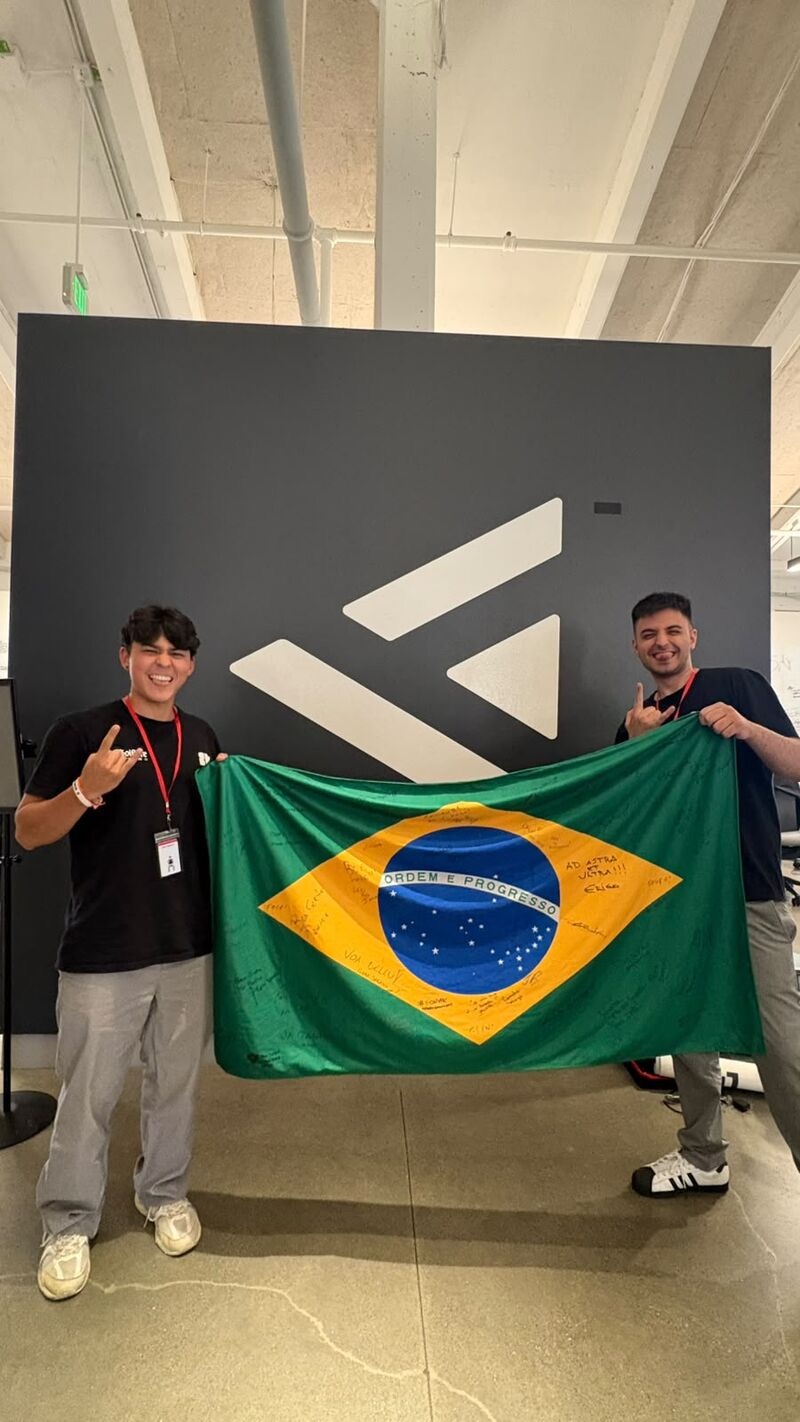
The trip also marked a special moment: it was in Thailand that Pedro and Belluzzo met in person for the first time, despite having already worked together and won several prizes. During those meetings, Bido drew interest from the ecosystem, including investment offers, according to the founders.
The experience reinforced a shared ambition. They did not want to just win competitions or build one more app. They wanted to build a company with global reach. It was that vision that took them to Founders, Inc., a community of founders in San Francisco, where they decided to focus their efforts on building Bido.
From an idea to 1,200 users
The first version of Bido had a different proposition from today’s: letting anyone buy products on the internet using artificial intelligence. The team built a universal checkout, in which AI agents could make purchases across different stores, simplifying the experience for the consumer.
The product began to show demand, reaching roughly 1,200 users. The technology validated a central idea: artificial intelligence could go beyond answering questions and start carrying out real tasks.
But a conversation with a procurement director would change the company’s future. On seeing Bido’s technology, the executive made a direct request to the founders:
“Automate my job.”
That sentence revealed a much bigger opportunity. While consumers were looking for convenience in online shopping, large companies were dealing with complex purchasing processes involving ERP systems, spreadsheets, suppliers, negotiations, approvals and international payments.
Pedro and Belluzzo realized they could apply the same technology to an enterprise-scale problem. Bido then pivoted, leaving the consumer market to build procurement as a service, run by artificial intelligence agents.
Building a company that goes beyond software
The change of market brought a new challenge. Automating industrial purchasing took more than building good AI models: it meant understanding how manufacturers and suppliers actually operate.
The founders traveled to China, visited factories, attended the Canton Fair and built direct relationships with manufacturers in cities such as Guangzhou, Yiwu and Yongkang. During that experience, they found that a large share of industrial negotiations depended on business relationships, trust and communication channels such as WeChat.
Bido’s strategy came to combine artificial intelligence agents with a real network of suppliers, so that the technology would not just find information but take part in carrying out industrial purchases. According to the company, more than 300 factories have already been registered in China. Bido also gained access to a base of roughly 40,000 suppliers through a connection made at the Canton Fair, which is being used in its qualification process.
Today, Bido builds AI agents able to analyze purchasing needs, find suppliers, request and compare quotes, negotiate commercial terms, prepare purchase orders and follow production and payment stages. The company is also building an infrastructure of programmable payments tied to production and quality milestones. The proposition is to deliver procurement end to end, rather than just one more tool to organize buyers’ work.
The first results and international recognition
The new phase started to produce commercial results. In November 2026, Bido had nine pilots under way, seven of them with signed contracts. Four customers had already completed the procurement flow through to purchase orders, and the platform had processed roughly $104,000 in purchase orders.
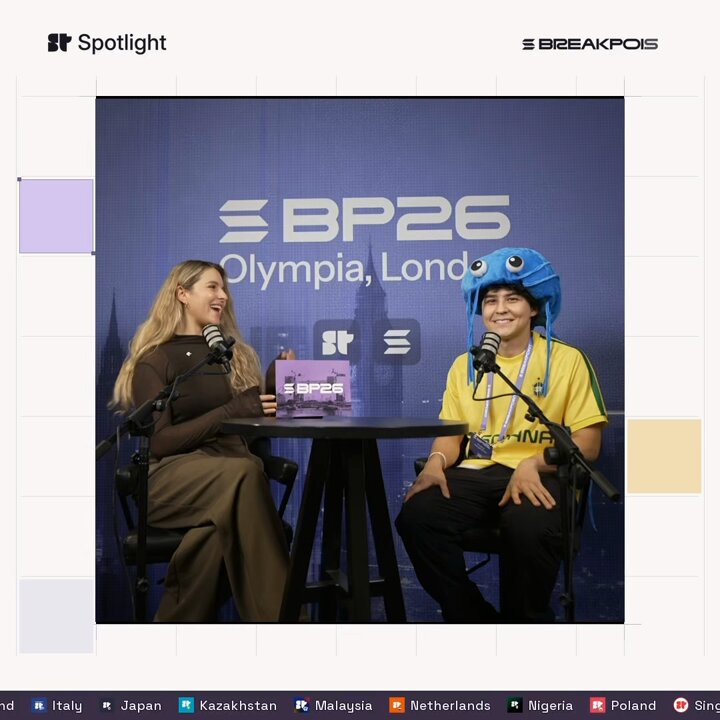
Alongside the commercial progress, the founders took the company’s vision to international events. In November, they presented Bido at the Silicon Valley November Summit, organized by Plug and Play, in California. Shortly after, they took part in Solana Breakpoint, in London, where they shared the company’s vision with the global Solana ecosystem. The journey also brought new connections with investors, entrepreneurship communities and companies interested in automating industrial operations with artificial intelligence.
For Pedro and Belluzzo, those moments mean more than international exposure. Not long before, Pedro was going to events in San Francisco to be able to eat. Now the two were presenting the company they built on the stages of some of the world’s leading technology gatherings.
An ambition that keeps growing
Bido is still at the start of its journey. The company keeps developing its technology, expanding its relationships with manufacturers and turning its first pilots into recurring commercial operations. But the founders’ story helps explain the mindset behind the business.
Pedro left ITA to learn about entrepreneurship in Silicon Valley. Belluzzo built his path by winning hackathons around the world. Together, they found a way to fund their own first steps, won the support of international communities and turned an idea about shopping with AI into a company aimed at the industrial market.
The journey went through Brazil, the United States, Thailand, China and the United Kingdom. It involved product changes, risky decisions and people who believed in the founders when they still had few resources. Superteam Brasil and Founders, Inc. played important roles along the way, offering opportunities, connections and support at decisive moments.
Today, Bido’s mission is to reinvent the way companies buy, combining artificial intelligence, real relationships and financial infrastructure to run procurement end to end. The ambition is big, and the work is only beginning.